La Paz: A Coastal Hub for Ecotourism and Environmental Action
La Paz, the capital and largest city of Baja California Sur, sits along the Bay of La Paz on the eastern coast of the Baja California Peninsula. With a 2020 population of 250,141 residents, it is the most populous city in the state and serves as a cultural and economic hub for the region. Renowned for its coastal beauty and proximity to the Sea of Cortez—often called the “Aquarium of the World”—La Paz thrives on ecotourism, offering activities such as snorkeling, diving, whaleshark tours, and visits to the UNESCO-protected Isla Espíritu Santo. Its urban landscape blends colonial architecture, modern amenities, and a vibrant waterfront promenade known as the Malecón. Economically, the city benefits from tourism services, fishing, and growing environmental initiatives supported by local government and NGOs.
Challenges to Circularity in La Paz
Despite its high quality of life and natural richness, La Paz faces significant challenges with plastic pollution due to the combination of high waste generation, limited recovery and recycling infrastructure, and the additional pressure of being an urban–coastal and tourismdriven city. Although the municipality manages to collect about 95% of all plastic waste generated, critical operational gaps persist, including irregular collection coverage, seasonal saturation during periods of high tourist influx, the absence of plastic recycling plants within the state, high logistical costs for transporting material to other regions, and low effective recovery rates (only 7% is valorized).
Roadblocks: Regulatory Gaps and Linear Consumption Habits
These weaknesses are aggravated by low regulatory compliance among commercial sectors —where 64.3% of businesses neither know nor apply local plastic restrictions, the prevalence of single-use plastics in high-mobility corridors such as the Malecón, and limited source separation at the household and commercial level. Altogether, these conditions contribute to a predominantly linear system and increase the likelihood of plastic losses and dispersion into urban and coastal environments.
Mapping the Mismanaged Waste in La Paz
The baseline assessment shows that La Paz generates 49,621 tons of plastic waste per year, of which 3,732 tons annually (equivalent to 8% of total plastic generation) are not managed and therefore constitute the fraction most likely to leak into the environment. According to the Waste Flow Assessment of 2024 , most leakage originates from uncollected waste (62.32%), followed by losses at the final disposal site (23.28%) and during waste collection operations (13.94%).
In terms of environmental fate, it is estimated that 2,256 tons/year of plastics remain on land, 1,473 tons/year reach water systems, and approximately 4 tons/year are carried into storm drains. In a coastal municipality, these pathways are particularly concerning, as wind, runoff, and proximity to the shoreline facilitate the movement of lightweight plastics into marine ecosystems. This underscores the urgency of strengthening control points across the system and prioritizing preventive strategies to reduce losses at their source.
Plastic Reduction Targets and Commitments
La Paz’s commitments include reducing Plastic waste by 30%, using the businesses in el Malecón as a proxy for citywide plastic waste generation. As part of these goals, Ponguinguiola will work with at least four businesses to fully eliminate single-use plastics from their operations.
How is La Paz Implementing Sustainable Plastic Solutions?
The project’s activities include working local NGO Ponguinguiola to conduct a complementary baseline assessment in the Malecón, where surveys with 112 businesses and systematic sampling of public containers provided detailed evidence on the daily use, disposal patterns, and potential leakage of single-use plastics in this high-mobility coastal corridor.
Building on these findings, in 2026, the project will conduct a second activity focused on working directly with businesses to identify viable alternatives to single-use plastics, especially for beverages and ready-to-eat foods commonly consumed along the waterfront, and to promote the gradual elimination of these items. Businesses that successfully transition to more sustainable practices will be eligible to receive a Green Badge/Insignia granted by the city government to recognise and incentivise improved environmental performance.
As a third component, the project will support the development of a citywide action plan to consolidate and expand complementary interventions—such as improving collection systems, strengthening enforcement, enhancing reduction-at-source strategies, and scaling circularity initiatives—grounded in the evidence generated by the baseline assessment.
Finally, the project will reinforce communication and citizen awareness, encouraging residents and visitors to use the recycling containers and public facilities provided by the municipality, and strengthening overall participation in proper waste segregation to reduce plastic leakage into coastal and urban ecosystems.
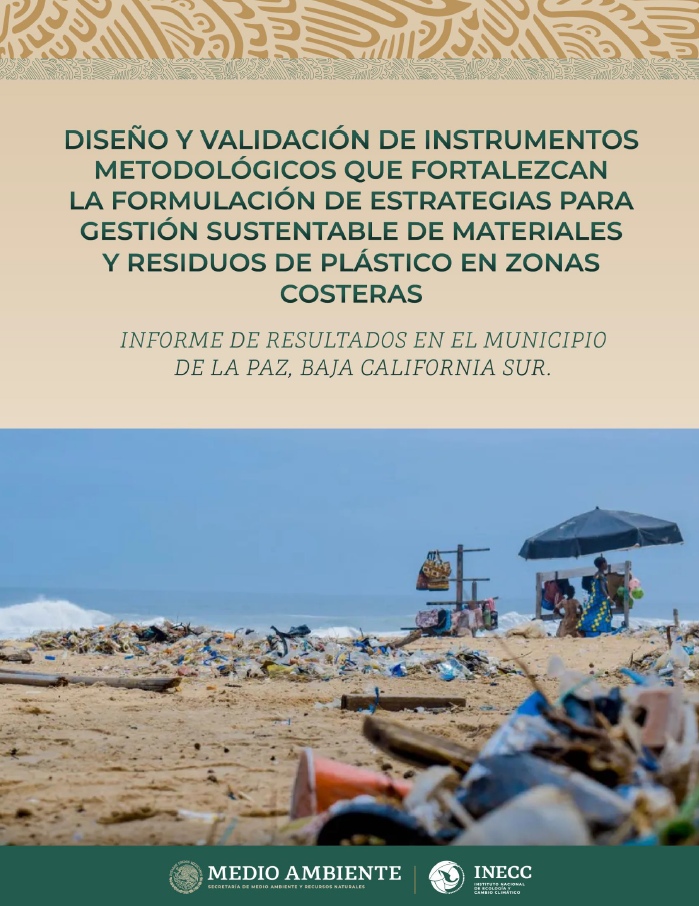
La Paz Plastic Waste Baseline Assessment (2024)
Design and Validation of Methodological Instrument that Strengthens the Formulation of Strategies for the Sustainable Management of Plastic Materials and Waste in Coastal Areas
Results Report for the Municipality of La Paz, Baja California Sur
Key Statistics and Plastic Leakage
Total Plastic Leakage: The study estimated that 3,732 tonnes of plastic waste leak into the environment annually.
Leakage Rate: This leakage represents approximately 8% of the total plastic waste generated in the municipality.
Primary Source: Most of this leakage originates from uncollected waste.
The report identifies the final destinations of leaked plastic:
- Land: 2,256 tonnes/year are retained on land.
- Water Systems: 1,473 tonnes/year reach water systems (rivers, arroyos, and the sea).
- Drains: 4 tonnes/year are removed from storm drains.
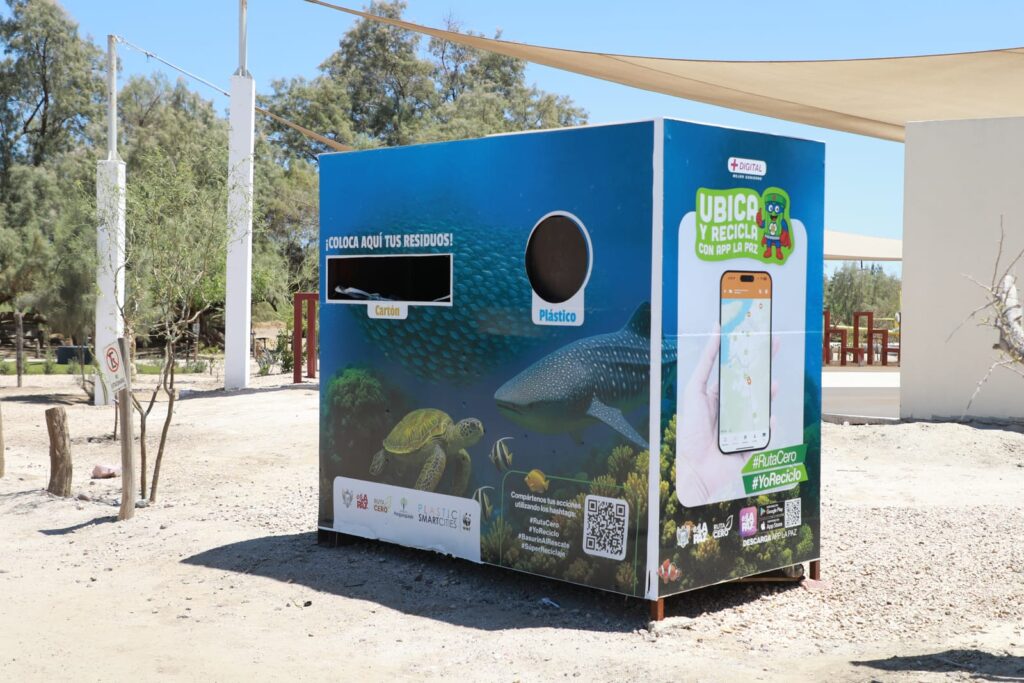
La Paz’s Ruta Cero 2.0 containers feature iconic local species like the whale shark to foster a sense of civic pride and encourage 24/7 community recycling habits.
The current Plastic Waste Management Approach in La Paz
La Paz has already advanced several best practices that position the city as an emerging leader in plastic reduction and circularity efforts. On the regulatory front, the municipality operates within a strengthened state framework that includes the “Desplastifícate” Law (Plastic Law), the NTE001SETUES2018 technical standard on restricting bags, straws, and expanded polystyrene, along with local regulations that guide plastic reduction programs and municipal oversight of commercial compliance.
The city also demonstrates growing environmental awareness, supported by city programs such as Embajadores por la Tierra (Earth Ambassadors) with primary schools and Ruta Cero. In terms of infrastructure, La Paz has established a network of micro waste collection facilities, including nine active local collection centers and multiple public recycling containers distributed throughout the city and high-traffic coastal areas, enabling the capture and sorting of PET, HDPE, cardboard, aluminum, and other recoverable materials.
Finally, the city is actively engaging the private sector through surveys, outreach, and pilot initiatives on the Malecón, where businesses are expected to participate in efforts in compliance with single-use plastic restrictions and participation in recognition programs like the forthcoming Green Badge or Insignia, which will incentivize and publicly acknowledge businesses that reduce or eliminate single-use plastics and adopt more sustainable practices.

Participants at the Cayma Action Plan workshop discuss strategies to prevent plastic leakage. This collaborative process emphasizes that every sector has a key role to play in protecting the environment from waste.

Government officials, recyclers, youth volunteers, and private sector leaders gather in Cayma to co-create the district’s Action Plan. Roughly 30 stakeholders attended each workshop to collaboratively design solutions for plastic pollution.